Major Arcana
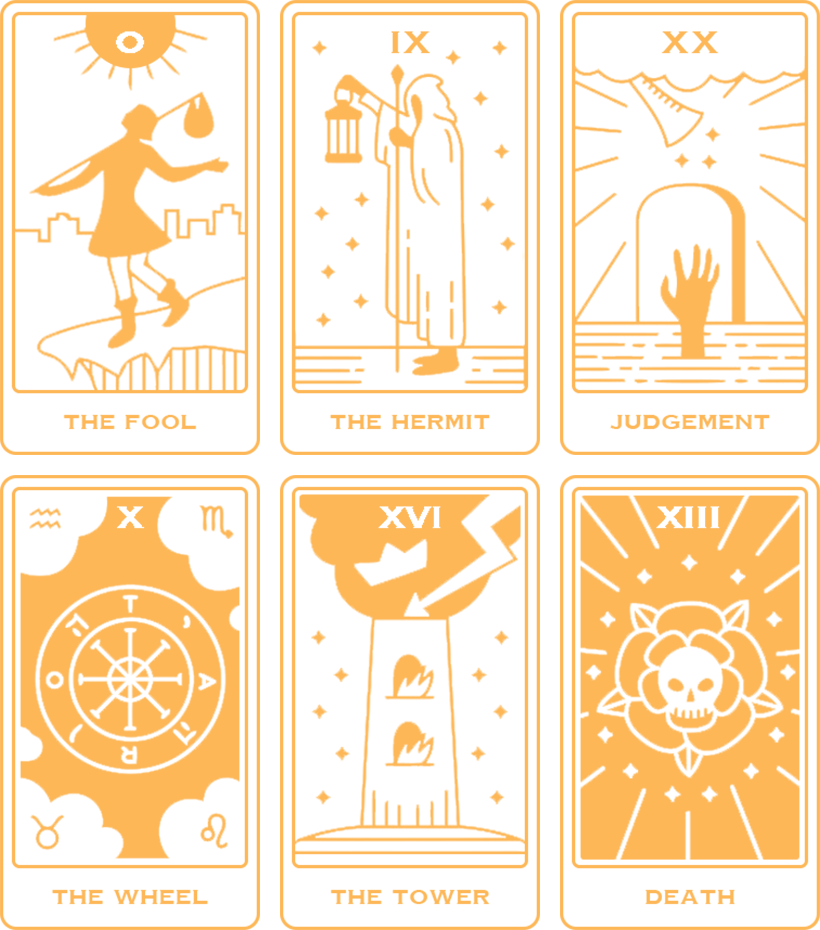
These cards track large lessons and life passages: beginnings, upheaval, love, discipline, endings, and completion.
Tarot Card Guide
Tarot decks began in fifteenth-century Italy as playing cards for games such as tarocchi. Centuries later, occult writers and artists reframed the deck as a tool for meditation, divination, and symbolic storytelling, culminating in influential modern decks like the Rider-Waite-Smith deck in 1909.
Major Arcana Cards
Cards in a full deck
Older than the printing press
How to read this set
These cards track large lessons and life passages: beginnings, upheaval, love, discipline, endings, and completion.
In a full deck, the suits describe everyday situations, moods, relationships, work, and practical decisions.
Start with image, feeling, and keywords. Let the cards suggest a pattern instead of forcing a fixed answer.
Current spread
A one-card pull is a clean snapshot. It works well for a daily focus, a writing prompt, or a single question you want to hold lightly.