History - Tarot Cards
Posted on March 22nd 2027
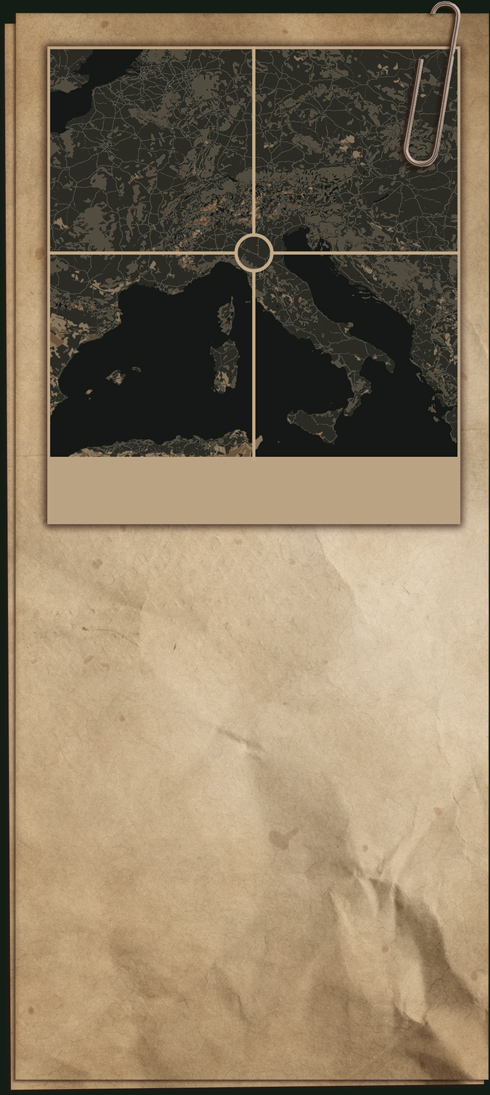
Italy, c. 15th century
Further Details
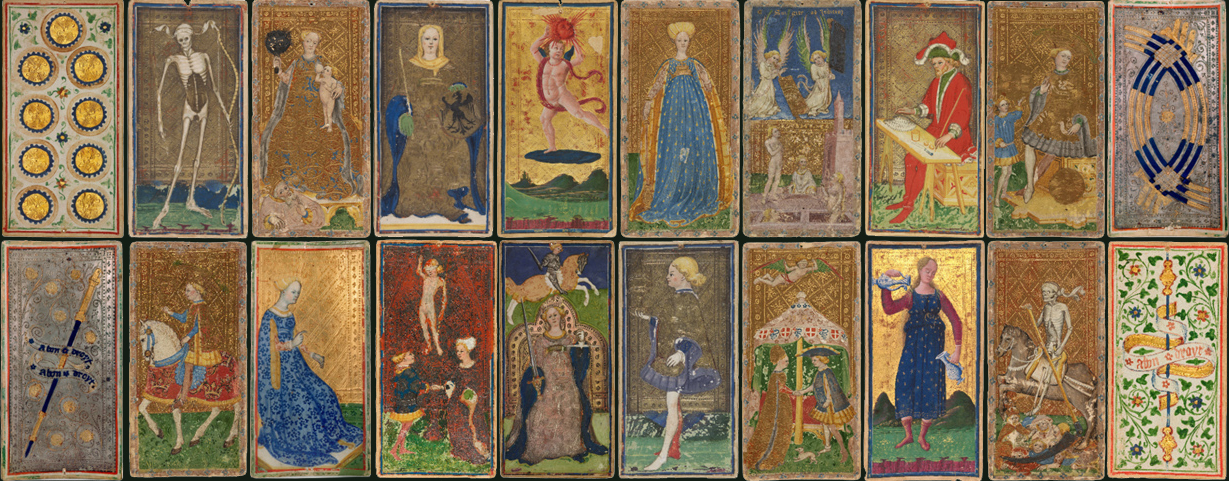
The earliest tarot decks appeared in the courts of northern Italy in the early-to-mid 1400s.
They were originally created as a card game, not for fortune telling.
A traditional tarot deck combines four standard suits with a special sequence of trump cards.
Tarot didn't become closely associated with mysticism and divination until much later, from the 18th century onwards.
The 1909 Rider-Waite-Smith deck helped shape the visual language most modern readers now recognise.
From common cards to occult icons.
Tarot cards didn’t begin as the mystical objects you might recognise from popular culture. The earliest known tarot decks were actually created in northern Italy during the 15th century, most likely for wealthy courts in cities such as Milan and Bologna.
These early decks were often called trionfi and later on, tarocchi or tarocks. Over time their structure developed into the format we still recognise today: the four suits, the numbered and court cards, and the sequence now commonly called the Major Arcana.
But while it’s true that tarot grew out of a culture that loved allegory and symbolism, many of the legends surrounding tarot were invented long after the cards themselves.
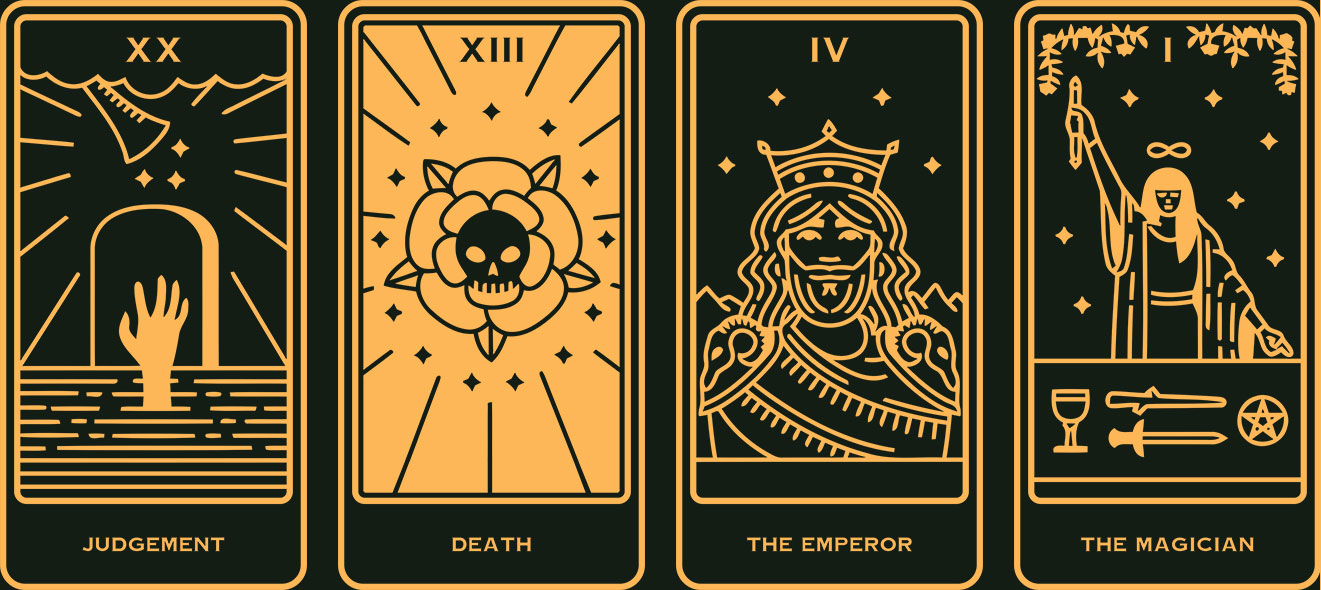
The imagery of early trump cards drew on common medieval concerns like judgement and death, featuring archetypes like emperors and magicians. They were powerful images long before they were treated as occult symbols.
The birth of tarot as a divinatory tool.
Tarot’s association with fortune telling came hundreds of years later. In the 18th century, French writers such as Antoine Court de Gebelin began claiming that tarot concealed ancient mystical knowledge. Soon after, he published one of the first systems for using the cards specifically for divination.
During the 19th century, occultists expanded these ideas further, linking tarot to astrology, numerology, Kabbalah, and ceremonial magic. By this point the cards had shifted from fashionable game pieces into something far more layered: a symbolic system that readers could interpret, rearrange, and invest with personal meaning.
The modern tarot deck.
The version of tarot most people know today owes a great deal to the Rider-Waite-Smith deck, first published in 1909. Designed by Arthur Edward Waite and illustrated by Pamela Colman Smith, it added memorable narrative scenes to all of the minor cards too, not just the trumps. The artwork made the cards more accessible and helped establish the visual vocabulary that continues to shape modern tarot today.
Whether viewed as a historical curiosity, a card game, or a tool for reflection, tarot has endured because it sits at the crossroads of symbology and story-telling. Few objects have been reinvented so many times while still remaining instantly recognisable.
From the author
“When researching different methods of divination and fortune-telling, cartomancy and tarot stood out as one of the more visual examples. The archetypes, specifically the cards of the major arcana, are recognised all over the world.
That makes it incredibly useful in fiction. A tarot card can function as an artefact, a clue, or a symbolic warning. Sometimes all three at once!
I’m looking forward to hiding some subtle references throughout the series so pay attention when reading! You never know when a hint or clue might appear.”

See also
Learn how to read your own cards